-
Platforms
Video games require a platform, a specific combination of electronic components or computer hardware and associated software, to operate.
Games are typically designed to be played on one or a limited number of platforms, and exclusivity to a platform is used as a competitive edge in the video game market
Most computer games are PC games, referring to those that involve a player interacting with a personal computer (PC) connected to a video monitor. Personal computers are not dedicated game platforms, so there may be differences running the same game on different hardware. Also, the openness allows some features to developers like reduced software cost, increased flexibility, increased innovation, emulation, creation of modifications or mods, open hosting for online gaming (in which a person plays a video game with people who are in a different household) and others.
A console game is played on a home console, a specialized electronic device that connects to a common television set or composite video monitor. Home consoles are specifically designed to play games using a dedicated hardware environment, giving developers a concrete hardware target for development and assurances of what features will be available, simplifying development compared to PC game development. Usually consoles only run games developed for it, or games from other platform made by the same company, but never games developed by its direct competitor, even if the same game is available on different platforms. It often comes with a specific game controller. Major console platforms include Xbox, PlayStation, and Nintendo.
A handheld gaming device is a small, self-contained electronic device that is portable and can be held in a user's hands. It features the console, a small screen, speakers and buttons, joystick or other game controllers in a single unit. Like consoles, handhelds are dedicated platforms, and share almost the same characteristics. Handheld hardware usually is less powerful than PC or console hardware. Some handheld games from the late 1970s and early 1980s could only play one game. In the 1990s and 2000s, a number of handheld games used cartridges, which enabled them to be used to play many different games. The handheld console has waned in the 2010s as mobile device gaming has become a more dominant factor.
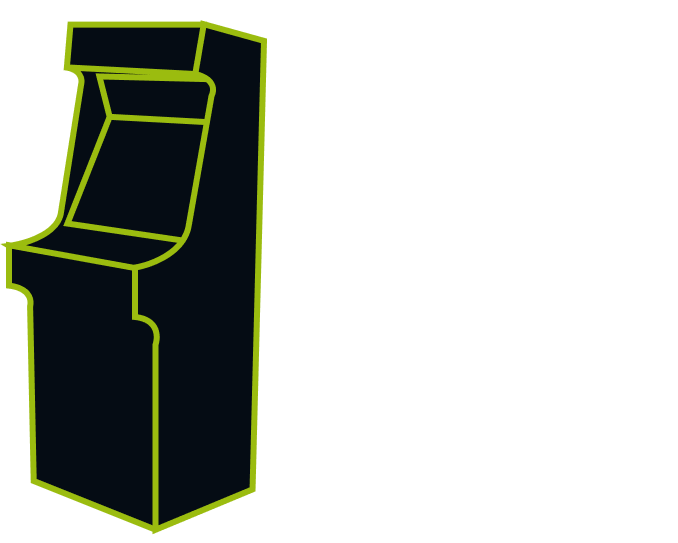
An arcade video game generally refers to a game played on an even more specialized type of electronic device that is typically designed to play only one game and is encased in a special, large coin-operated cabinet which has one built-in console, controllers (joystick, buttons, etc.), a CRT screen, and audio amplifier and speakers. Arcade games often have brightly painted logos and images relating to the theme of the game. While most arcade games are housed in a vertical cabinet, which the user typically stands in front of to play, some arcade games use a tabletop approach, in which the display screen is housed in a table-style cabinet with a see-through table top.
A browser game takes advantages of standardizations of technologies for the functionality of web browsers across multiple devices providing a cross-platform environment. These games may be identified based on the website that they appear, such as with Miniclip games. Others are named based on the programming platform used to develop them, such as Java and Flash games.
With the introduction of smartphones and tablet computers standardized on the iOS and Android operating systems, mobile gaming has become a significant platform. These games may utilize unique features of mobile devices that are not necessary present on other platforms, such as accelerometers, global positing information and camera devices to support augmented reality gameplay.

Cloud gaming requires a minimal hardware device, such as a basic computer, console, laptop, mobile phone or even a dedicated hardware device connected to a display with good Internet connectivity that connects to hardware systems by the cloud gaming provider. The game is computed and rendered on the remote hardware, using a number of predictive methods to reduce the network latency between player input and output on their display device. For example, the Xbox Cloud Gaming and PlayStation Now platforms use dedicated custom server blade hardware in cloud computing centers.

Virtual reality (VR) games generally require players to use a special head-mounted unit that provides stereoscopic screens and motion tracking to immerse a player within virtual environment that responds to their head movements. Some VR systems include control units for the player's hands as to provide a direct way to interact with the virtual world. VR systems generally require a separate computer, console, or other processing device that couples with the head-mounted unit.

An emulator enables games from a console or otherwise different system to be run in a type of virtual machine on a modern system, simulating the hardware of the original and allows old games to be played. While emulators themselves have been found to be legal in United States case law, the act of obtaining the game software that one does not already own may violate copyrights. However, there are some official releases of emulated software from game manufacturers, such as Nintendo with its Virtual Console or Nintendo Switch Online offerings.

Backward compatibility is similar in nature to emulation in that older games can be played on newer platforms, but typically directly though hardware and build-in software within the platform. For example, the PlayStation 2 is capable of playing original PlayStation games simply by inserting the original game media into the newer console, while Nintendo's Wii could play Nintendo GameCube titles as well in the same manner.